Proxy Pass
An internal endpoint trusts an address normally supplied by a reverse proxy. Determine whether a direct client can supply the same trust signal.
Objective
- Send a custom forwarding header and compare authorization results.
- Explain why forwarded metadata is trustworthy only from known proxies.
Before you begin
Open /challenge/medium/proxy, then request the diagnostic endpoint normally.
Concepts
Headers such as X-Forwarded-For are client input unless a trusted proxy removes inbound copies and writes its own value across a controlled boundary.
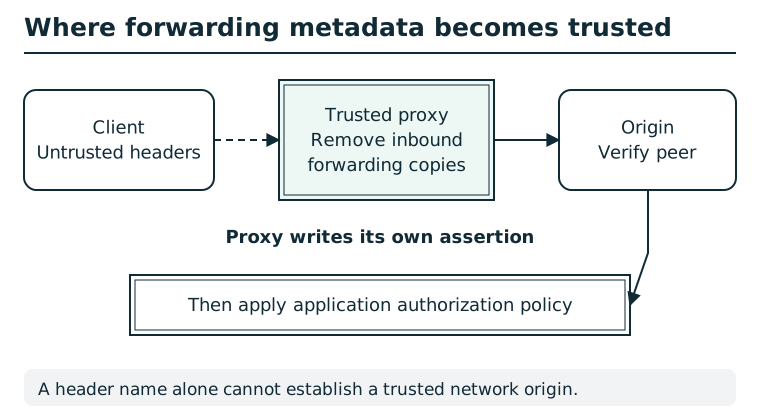
A forwarding header begins as client input. A trusted proxy removes inbound copies, writes its own assertion, and uses a controlled connection to the origin. The origin verifies that peer before interpreting the assertion; application authorization is still a separate decision.
Suggested tools
- HTTP client: Send one request with an explicit custom header.
Tool practice
Rehearse the worked tool exercise before using challenge data.
Use -H with the complete quoted Name: value argument. Preserve the denied response and compare it with one changed request. The endpoint supplies the header-name clue; the challenge page supplies the address clue. Keep those two sources distinct in your notes.
Investigation
Observe
Record the header-name hint in the denied response and the expected internal address in the challenge page's deployment note.
Form a hypothesis
Does the application verify the request came through a trusted proxy, or only compare the header text?
Test carefully
Change only the evidence-backed forwarding field, send one request, and compare it with the denied baseline.
Progressive hints
Hint 1
Read the endpoint's denied JSON response.
Hint 2
It names the forwarding header.
Hint 3
Use the response evidence to choose one header value; change nothing else.
Troubleshooting and reset
Header names are case-insensitive, but values must match exactly. This module stores no state and needs no reset.